Tariffs in the Wedding Gown Industry

Shelly Bouse • April 21, 2025

Tariffs Explained: Impact & Implications in the wedding gown industry

Key Highlights

  • Tariffs are taxes on imported goods that influence global trade, impacting local businesses and consumer prices in the wedding gown industry.
  • Recent tariffs imposed by the Trump administration, particularly on Chinese imports, have significantly increased costs for wedding gown manufacturers.
  • Approximately 90% of wedding gowns are made in China, making the industry highly sensitive to tariff hikes, with potential price increases of up to 145% on Chinese goods.
  • Higher tariffs raise production costs, leading to pricier gowns for brides and prompting manufacturers to explore alternative sourcing strategies.
  • Consumer awareness and strategic purchasing can mitigate the impact of tariff-driven price increases.


Tariffs are critical tools in shaping global trade and economics, with significant implications for industries like wedding gowns, which rely heavily on imported materials and labor. These taxes, often referred to as customs or import duties, create trade barriers that affect pricing, supply chains, and domestic manufacturing. In 2025, the Trump administration’s escalated tariffs, particularly targeting Chinese imports, have disrupted the wedding gown industry, where 90% of gowns are produced in China. Understanding these changes is essential for manufacturers and brides navigating this evolving market.


Understanding Tariffs and Their Basic Function


Tariffs have long been used to regulate international trade, generate government revenue, and protect domestic industries. By increasing the cost of imported goods, tariffs encourage local production but often lead to higher consumer prices. In the wedding gown industry, tariffs on fabrics, lace, and finished dresses directly impact production costs and retail prices, affecting both manufacturers and brides. Trade barriers can also strain international relations, as seen in recent U.S.-China trade tensions, influencing global supply chains and economic stability.


What is a Tariff?


A tariff is a tax imposed on goods entering a country, commonly known as customs or import duties. Governments use tariffs to raise revenue and shield local industries from foreign competition. For example, higher tariffs on imported fabrics make domestically produced materials more competitive, but they also increase costs for manufacturers reliant on overseas suppliers. In the wedding gown industry, where materials like silk and embellishments are often imported, these taxes can significantly raise retail prices, impacting brides’ budgets


Different Types of Tariffs and Their Purposes


Tariffs are different kinds of rules. Each type helps different parts of the economy. Here are some main types:


  • Ad Valorem Tariff:  This tariff is based on a percentage of the value of goods. It is commonly used for items like steel or costly imports from other countries.
  • Specific Tariffs:  This tariff involves charging a set amount for each product. For example, it could be $50 for every dress or accessory imported from abroad.
  • Retaliatory Tariffs: These tariffs are used in response to tariffs set by another country. They aim to bring back economic balance and typically occur during trade disputes.


These tariffs increase costs for imported materials like lace and beads, critical to wedding gown production, forcing manufacturers to either absorb costs or pass them on to consumers.


Historical Context of Tariffs in the Wedding Gown Industry


Historical Context of Tariffs in the Wedding Gown Industry


Tariffs have shaped the wedding gown industry for centuries, influencing production and pricing. Early tariffs in the 1800s supported U.S. textile industries, while global trade expansion in the 20th century reduced duties, enabling access to affordable imported fabrics. Recent tariff policies, particularly under the Trump administration, have reversed this trend, imposing high duties on Chinese goods to bolster domestic manufacturing, though at the cost of higher gown prices.
Early Implementations and Their Impact


In the 1800s, tariffs like the 1828 Tariff of Abominations boosted Northern textile industries, aiding gown production but raising material costs. During the Civil War, high import duties funded war efforts and expanded domestic sewing supply industries. These early tariffs laid the groundwork for balancing local production with global trade, a challenge that persists today as manufacturers navigate rising costs from new tariffs.
Evolution of Tariffs Over the Decades


The 1930 Smoot-Hawley Tariff Act raised duties, increasing gown production costs during the Great Depression. Post-World War II, agreements like the Reciprocal Trade Agreements Act of 1934 lowered tariffs, benefiting bridal designers by making imported fabrics more affordable. Recent decades have seen a shift toward protectionism, with the Trump administration’s 2025 tariffs on Chinese goods (up to 145%) disrupting the industry’s reliance on affordable imports.
Current Tariff Policies Affecting the Wedding Gown Industry


In April 2025, the Trump administration implemented a 145% tariff on Chinese imports, significantly impacting the wedding gown industry, where 90% of gowns are manufactured in China. A 90-day pause on tariffs for other countries was announced, but the 125% duty on Chinese goods (plus a 20% fentanyl-related tariff) remains, alongside a 10% baseline tariff on all imports. These policies aim to boost U.S. manufacturing but have raised costs for bridal retailers and consumers.
Overview of Existing Tariff Rates


Current tariff rates affecting the wedding gown industry include:

The high tariffs on Chinese goods, critical for gown production, have led to price hikes, with some dresses potentially doubling in cost. Lower rates on Canadian and Mexican imports offer some relief, but manufacturers still face supply chain challenges.


Recent Changes and Their Rationale


The Trump administration’s 2025 tariffs aim to reduce reliance on Chinese imports and encourage U.S. manufacturing. The 145% tariff on Chinese goods, effective April 2025, responds to China’s retaliatory tariffs and seeks to address trade imbalances. While intended to protect domestic industries, these tariffs have disrupted the wedding gown market, with retailers like David’s Bridal shifting production to countries like Sri Lanka and Myanmar to mitigate costs. The 90-day pause on other tariffs provides temporary relief but adds uncertainty.


Econo  mic Impact of Tariffs on the Wedding Gown Industry

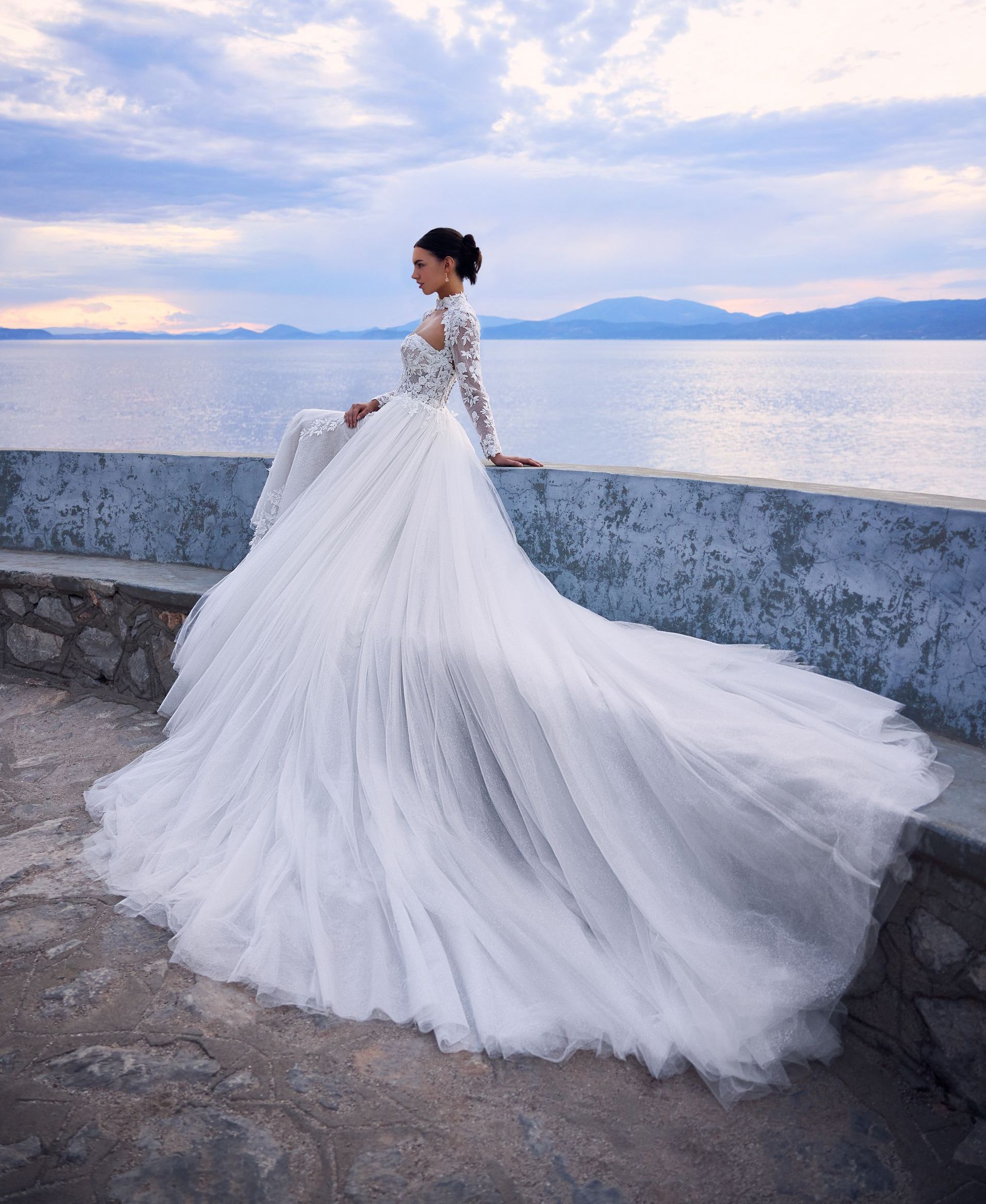
Woman in white wedding dress sits on wall overlooking sea.

Economic Impact of Tariffs on the Wedding Gown Industry


The 2025 tariffs have increased production costs, with 90% of wedding gowns affected by Chinese import duties. Retail prices for gowns, averaging $2,000, could double, straining brides’ budgets. Supply chain disruptions and retaliatory tariffs further complicate global trade, slowing industry growth and challenging small bridal retailers.
Cost Implications for Manufacturers


Manufacturers face higher costs for imported materials and finished gowns, with some reporting daily updates on tariff rates. Small retailers, like Formality Bridal, have cut budgets and explored sourcing from countries like Russia to avoid tariffs. Larger companies, such as David’s Bridal, have reduced China-based production from 50% to 30%, but shifting supply chains is costly and time-consuming. These changes threaten profitability and competitiveness.
Pricing Effects on Consumers


Brides face significant price increases, with gowns potentially rising from $2,000 to over $4,000 due to the 145% Chinese tariffs. Made-to-order dresses ordered before the tariffs may incur unexpected fees upon delivery, adding stress for couples. Some brides are opting for cheaper alternatives or in-stock gowns to avoid tariff costs, impacting their wedding budgets and choices.
Global Trade Dynamics and Tariffs


Tariffs reshape international trade, with the U.S.-China trade war escalating tensions. Retaliatory tariffs from China (up to 125% on U.S. exports) complicate global supply chains. Free trade agreements, like the USMCA, offer some relief by maintaining lower duties for Canada and Mexico, but the wedding gown industry’s reliance on Chinese production limits benefits. Economic policies must balance protectionism with growth to avoid long-term disruptions.


How Tariffs Shape International Trade Relations


Tariffs protect domestic industries but risk trade wars, as seen with China’s response to U.S. duties. The wedding gown industry, dependent on Chinese manufacturing, faces supply chain challenges, prompting shifts to countries with lower tariffs, like Vietnam or Myanmar. These shifts may not benefit U.S. manufacturing, as costs remain high domestically. Global trade stability hinges on managing these tensions.


Case Studies: Tariff Impacts in Other Countries


In the EU, retaliatory tariffs on U.S. goods have harmed American exporters, worsening trade deficits. Australia’s tariff reductions, conversely, have boosted local industries and trade partnerships. For the wedding gown industry, China’s dominance means U.S. tariffs disrupt global supply chains, while countries like Sri Lanka benefit from redirected production. These cases highlight tariffs’ varied impacts on trade.


Strategies for Navigating Tariffs in the Wedding Gown Industry


Manufacturers and consumers must adapt to tariff-driven challenges. Diversifying supply chains, sourcing locally, and leveraging in-stock inventories can mitigate costs. Brides can seek domestic or tariff-free options to manage budgets, ensuring quality and affordability in a volatile market.


Mitigation Techniques for Manufacturers


Diversify Suppliers:
Source materials from countries with lower tariffs, like Canada or Mexico, to reduce reliance on Chinese imports. Shift Production : Move manufacturing to tariff-friendly countries, as David’s Bridal has done with Sri Lanka and Myanmar. Stockpile Inventory : Retailers can hold in-stock gowns to avoid new tariffs, as suggested by some small shops. Invest Locally : Increase domestic production to bypass import duties, though high costs pose challenges. Leverage Trade


Agreements: Use USMCA benefits to source materials from Canada or Mexico at lower rates. Tips for Consumers to Avoid Overpaying Choose In-Stock Gowns : Opt for dresses already in stores, like those at Fifi’s Bridal, to avoid tariff surcharges. Buy Domestic  : Select gowns from U.S. stores and manufacturers like Fifi's Bridal and Casablanca Bridal, which avoid import duties. Shop Sales : Look for promotions to offset price increases driven by tariffs. Plan Early  :Order dresses well in advance to avoid unexpected tariff fees on made-to-order gowns.  Research Retailers  : Choose brands transparent about tariff impacts to ensure fair pricing like Fifi's Bridal.


Fifi’s Bridal: Tariff-Free In-Stock Dresses


Fifi’s Bridal offers a wide selection of wedding gowns without tariff-related price hikes, as their in-stock inventory avoids new import duties. By sourcing materials locally or from tariff-exempt regions, Fifi’s keeps prices affordable, easing the financial burden for brides in a tariff-heavy market.


Casablanca Bridal: No Tariffs for Customers


Casablanca Bridal commits to absorbing tariff costs, ensuring no additional fees for customers. By prioritizing domestic manufacturing and strategic sourcing, they maintain affordability and quality, reinforcing their dedication to accessible luxury gowns.

The Trump administration’s 2025 tariffs, particularly the 145% duty on Chinese imports, have profoundly impacted the wedding gown industry, raising costs and challenging supply chains. With 90% of gowns made in China, manufacturers and consumers face higher prices and limited options. By understanding tariffs and adopting strategic approaches—like diversifying suppliers or choosing in-stock dresses—stakeholders can navigate these changes, fostering resilience and growth in a dynamic global market.  Schedule an appointment with us today to understand your options.


Frequently Asked Questions


How do tariffs directly affect wedding gown prices?


Tariffs, like the 145% duty on Chinese imports, increase the cost of materials and finished gowns, often doubling retail prices from $2,000 to over $4,000. This forces brides to adjust budgets or seek cheaper alternatives.


Can manufacturers absorb tariff costs to maintain prices?


Some manufacturers, like Casablanca Bridal, absorb costs to keep prices stable, but many must raise prices or shift production to lower-tariff countries. Small retailers struggle most, often passing costs to consumers.

Bride and groom walking hand in hand down a street, bride’s long veil trailing behind them.
By Shelly Bouse August 17, 2026
Achieve a stunning dua lipa wedding look with Fifi's bridal gowns. Explore our blog for styles that will make your special day unforgettable!
Man standing in a room, holding a long orange-handled tool beside a blue cabinet and patterned rug
By Shelly Bouse August 7, 2026
Searching for uniform tailors near me? Fifi's Bridal offers expert tailoring services to create the perfect fit for your uniforms. Visit our blog to learn more!
Person walking on a tree-lined dirt path, carrying a bag, with a sign on the left
By Shelly Bouse August 3, 2026
Discover stunning wedding dress styles inspired by Emma Roberts at Fifi's Bridal. Explore our blog for the latest trends and elegant designs perfect for your big day!
Woman in a white wedding dress. Text reads,
By Shelly Bouse July 29, 2026
Find the perfect winter bridal dresses for your wedding. Explore the top styles and designs to make your day unforgettable.
Group of friends in formal wear; text:
By Shelly Bouse July 28, 2026
Get ready for the perfect night with our guide to homecoming dresses 2026. Discover stress-free alterations for a flawless fit in Elmhurst.
Bridal fashion ad featuring a woman in a blue mermaid gown with text: “Mother of the Bride: Essential Tips for Dress Selection”
By Shelly Bouse July 27, 2026
Discover essential tips for choosing the perfect Mother of the Bride dress. Our guide will ensure you feel confident and beautiful on this special day.
A beautiful designer wedding gown on display in an Elmhurst bridal shop.
July 17, 2026
Find designer wedding gowns for only $199 at Fifi's Bridal in Elmhurst! Exclusive pick-up only sale on stunning bridal gowns. Visit us today to find your dream dress at a fraction of the price.
Close up of a sparkly wedding dress fabric
July 14, 2026
When will we see the Taylor Swift wedding gown? Explore the fashion theories, designer bets, and why custom tailoring is the real star of the show.
Modern tailor reimagining a vintage wedding dress in a bright Chicago bridal salon.
July 9, 2026
Transform your mother’s wedding dress into a stunning bridal shower or rehearsal dinner look with Fifi’s Bridal heirloom wedding dress redesign in Elmhurst, IL.
A beautiful white bridal gown displayed in a luxury boutique window.
July 4, 2026
Enter Fifi's Bridal & Custom Tailoring 2026 Bridal Gown Giveaway in Elmhurst, IL. Learn how you can win a stunning designer wedding dress this July and make your wedding dreams a reality.
Show More